%20wo%20background.png)
In The Art Of War, Sun Tzu Says, Title Must Be Awarded First Before Respect

Updated: Jul 20
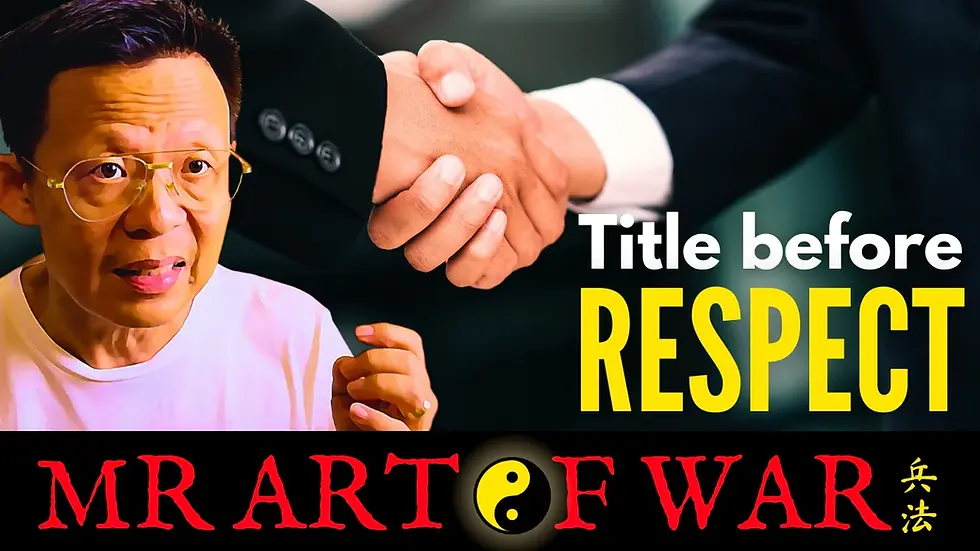
In The Art of War, Sun Tzu says,
that a leader or a general must receive their title first, then respect can be earned.
As the General, you must be honoured with the right to lead.
Sun Tzu mentioned in his Art of War book,
In war, the general receives his commands from the sovereign, gathers his army, and assembles his troops.
In ancient China, the emperor would give a "tiger tally" to the general as military authorization to deploy troops.
A tiger tally is a token used to authorize military actions. It is a piece of metal shaped like a tiger that comes in two identical pieces, one given to the General as a form of authority to take action, and the other is kept as a record by the Emperor.
So the general will receive his title and authority before he assembles his troops.
In the realm of leadership, whether in a military context or within the corporate world, the concept of respect is multifaceted and complex. It is crucial to understand that respect is not merely a byproduct of personal achievements or charisma; rather, it is a formal recognition of one's position and authority.
As a leader, especially in the capacity of a General, you must be bestowed with the necessary titles, blessings, and the inherent authority that comes with your role.
This formal recognition is essential for you to effectively guide and inspire your team, as it lays the groundwork for the mutual trust and cooperation necessary for successful leadership.

Without the title, blessings, and authority given to you as a "Military Officer" or a Corporate Manager, you cannot lead your team effectively.
The legitimacy of your position is paramount; it serves as the foundation upon which your leadership is built. When you hold a recognized title, you are granted a certain level of respect that is inherent to that position.
This respect is not simply about personal relationships but is deeply rooted in the structure and culture of the organization, whether it be a military unit or a corporate entity.
The authority that accompanies your title empowers you to make decisions, implement strategies, and lead your team towards achieving collective goals.
Respect comes in two ways.
It comes from the ones above you, which is awarded, and the other is earned from those below you.
The respect that is awarded by superiors is a recognition of your position and the responsibilities that come with it.
This top-down respect is critical as it legitimizes your authority and provides you with the backing needed to lead effectively. Conversely, the respect that is earned from your subordinates is equally important.
It is a reflection of your ability to inspire, motivate, and connect with your team on a personal level. Earning this respect involves demonstrating competence, integrity, and a commitment to the welfare of your team members.
According to the great ancient military strategist, Sun Tzu, who wrote the book "The Art of War," he said...
One of the most profound lessons from Sun Tzu is the necessity of obtaining the blessings from the "Emperor" first before you march your troops to battle.
Power to lead comes from the legitimacy to lead and authority in leadership.
In ancient China, leaders who attempted to assert their command without the Emperor's explicit approval faced dire consequences, often leading to execution.
This historical context highlights the gravity of leading without proper authority and the potential repercussions that can arise from such actions.
When a Military Officer or a Corporate Manager leads without authority, it is called, mutiny, insubordination,
These terms carry significant weight in both military and corporate settings. In the military, mutiny refers to the act of soldiers rebelling against their commanding officers, which can undermine the entire structure and effectiveness of the military unit.
Similarly, insubordination in a corporate environment reflects a refusal to obey lawful orders or directives from superiors, which can disrupt the workflow and create a toxic atmosphere within the organization.
Such acts not only jeopardize the mission's success but also erode the trust and respect that are essential for effective leadership.
Military organizations operate under a strict hierarchical structure with clearly defined lines of command. This structure is designed to ensure order, discipline, and accountability.
Each rank has its responsibilities and expectations, and respect for this hierarchy is fundamental to maintaining operational effectiveness. The clear delineation of authority allows for swift decision-making and a unified response to challenges, which is critical in high-stakes situations.
Similar to the modern corporate management structure, all Managers of different levels will have to adhere and operate according to the company hierarchy structure.
In the corporate realm, respect for the hierarchy fosters a culture of professionalism and collaboration. Each manager, regardless of their level, is expected to respect the chain of command while also working to earn the respect of their subordinates.
As in The Art of War Sun Tzu wrote in his Art of War book about "The Doctrine",
By doctrine, it is expected that the positioning of the army in its proper subdivisions, gradations of rank among officers.
This dual approach to respect—both awarded and earned—creates a balanced environment where leaders can effectively guide their teams towards achieving shared objectives while fostering a culture of mutual respect and accountability.
MrArtOfWar.com is the best Art Of War program/course online audiobook that teaches you the strategy to win in life, career, and business.


